
Showing posts with label Constructing explanations. Show all posts
Showing posts with label Constructing explanations. Show all posts
Thursday, May 23, 2019
Lightning Before Thunder
This lesson was originally a 3 day exploration in the properties of light waves versus sound waves. While writing this post I realized this is exactly what students need to know to understand why we see lightning before we hear thunder. I plan to tinker with this idea more next year to better connect the phenomena to the student explorations.

Friday, November 16, 2018
Why do plants grow toward the sun?
Middle School Life Science Lesson:
Energy Transfer and Transformation in Photosynthesis
Energy Transfer and Transformation in Photosynthesis
MS:LS 1-6: Construct a scientific explanation based on evidence for the role of photosynthesis in the cycling of matter and flow of energy into and out of organisms.
Ultimately, we want students to have a deep understanding of how photosynthesis provides the connection between energy and matter in an ecosystem. Looking at this "Matter & Energy" graphic organizer, it's not going to be easy for students to truly explain this process (though I bet they all think they could!).
 |
| From the set of Crosscutting Concepts Graphic Organizers in 11x17 |
Breaking the concept apart, however, allows student to focus on the individual components before putting it all together. I built this lesson so that students discover exactly what's going on inside the leaf when it absorbs sunlight.
(A funny side-story that will serve as caution to you... I find a lot of great digital resources that we use in class. But sometimes this leads me down a path where I forget to do some traditional activities where students really can learn a lot by observing in class. In this case, I was looking for a way for students to see chloroplasts... and spent a half hour looking for the perfect pictures before I had the "Aha!" that we should just find them ourselves in spinach leaves by doing a microscope station! DON'T make the mistake of ignoring those tried and true experiences when you're writing 3D lessons!)
After completion of this lesson (it takes 2-3 class periods), students can begin to fill in the graphic organizer. They will have the inputs on the left and the beginning part of the process. To follow this lesson, students will next learn about glucose and how it's made, and about how carbon dioxide travels into the leaf to become a huge part of the "matter" involved in the process.
Saturday, October 27, 2018
How do leaves change color in the fall?
Middle School Life Science
MS:LS 1-6: Construct a scientific explanation based on evidence for the role of photosynthesis in the cycling of matter and flow of energy into and out of organisms.
I've been looking for a good lesson to try out the Experimental Design & Report Sheet that Cookie Barker designed last year, and found it when thinking about the phenomenon of fall leaves. The series of lessons and investigations were really successful, and we stayed organized as a class for a whole week (due to an unfortunate series of fire drills interrupting class) thanks to Cookie's template.
Click here for a copy of the full lesson.
Friday, September 28, 2018
All The Colors in the Sky (Regents Chemistry) NYSSLS Lesson Study
This is a 3-D Chemistry lesson on the topic of Atomic Spectra and Energy Levels using the familiar flame test lab. The student presentation is shown, with the student guide that was created specifically for the lesson. At the end of the presentation is a 35 minute video that shows the lesson in it's entirety with a couple of reflective comments. Please feel free to leave comments below.
Thursday, August 17, 2017

Wednesday, August 16, 2017
Exploring modeling instruction and the properties of matter
3D Middle School Physical Science Lesson
MS PS1-4: Develop a model that predicts and describes changes in particle motion, temperature, and state of a pure substance when thermal energy is added or removed.
Clarification Statement: Emphasis is on qualitative molecular-level models of solids, liquids, and gases to show that adding or removing thermal energy increases or decreases kinetic energy of the particles until a change of state occurs. Examples of models could include drawing and diagrams. Examples of particles could include molecules or inert atoms. Examples of pure substances could include water, carbon dioxide, and helium.
Phenomenon:
What happens when you add an ice cube to a cylinder filled with oil?
 |
| Photo from Steve Spangler Science |
Students can use the Systems & Models graphic organizer to begin developing a model of the phenomenon, and whiteboards later on to build a group consensus model.
 |
| Link to full set of Crosscutting Concepts Graphic Organizers |
3-dimensional lesson plan for this phenomenon:
 |
| Link to lesson file with blank template |
Modeling the phenomenon:
The most important facet of this lesson is the development of student models to diagram and explain the phenomenon. The demonstration sets the stage for student understanding; it's important for the teacher to equip students with the opportunity to ask questions to reveal new layers of understanding of the phenomenon. Through group collaboration, class discussion, and individual reflection, students have an opportunity to continually revise their understanding. Class discussion, led by the teacher, is critical so that key vocabulary and concepts are connected to student understanding and represented in the consensus model. Teachers need to be equipped to guide students through any typical misconceptions during the discussion phase.
Want more information about modeling instruction?
Here's a synopsis from the American Modeling Teachers Association.
Wednesday, March 1, 2017
Monday, February 20, 2017
Friday, January 20, 2017
Hot Ice in 3-D
An example of GRC in a my chemistry classroom ... there are videos embedded in this slideshow that show the lesson in progress and I reflect on the lesson at the end... included also are some journal entries from my students.
Wednesday, January 18, 2017
Making Sense out of pH
 |
| https://upload.wikimedia.org/wikipedia/commons/1/13/Phoenicopterus_minor_-Lake_Bogoria%2C_Kenya-8a.jpg |
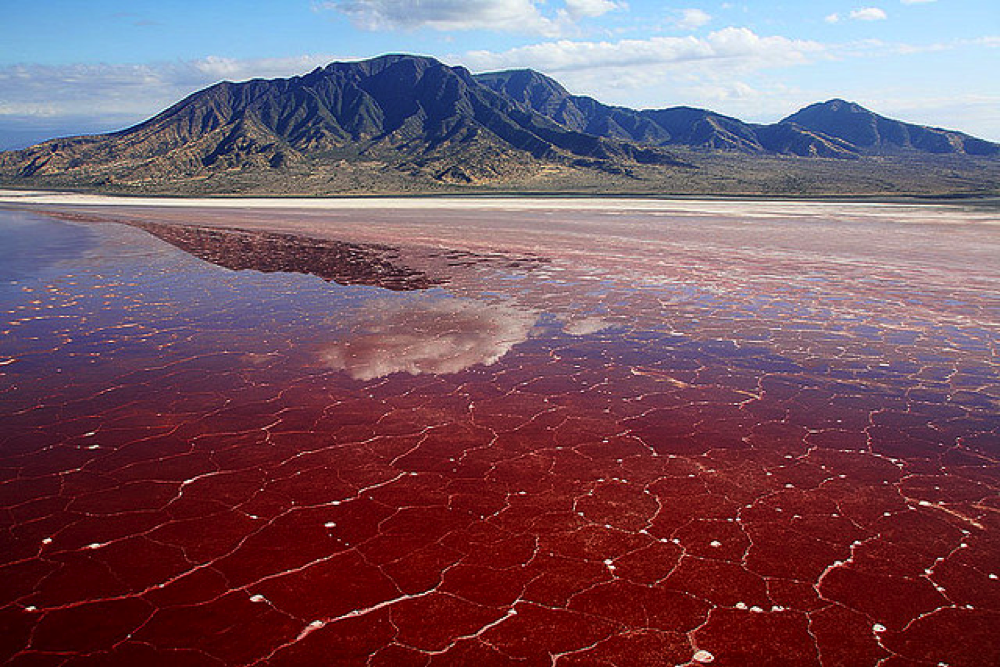
Lake Natron, Tanzania, Africa
 |
| https://oncirculation.files.wordpress.com/2013/11/petrorrific2.png |
Making Sense Out of pH
Background Information:
Lake Natron, Tanzania has a pH of between 9 and 10 as a result of water from hot springs entering the lake. There is no outlet, water simply evaporates increasing the salt concentration of the lake. Acid rain does lower the pH of the lake, but in dry years the pH remains high. The red color of the water comes from microorganisms in the lake. Few other organisms are able to survive in these harsh conditions. Flamingos however, can withstand the high pH and use the lake as a breeding ground.
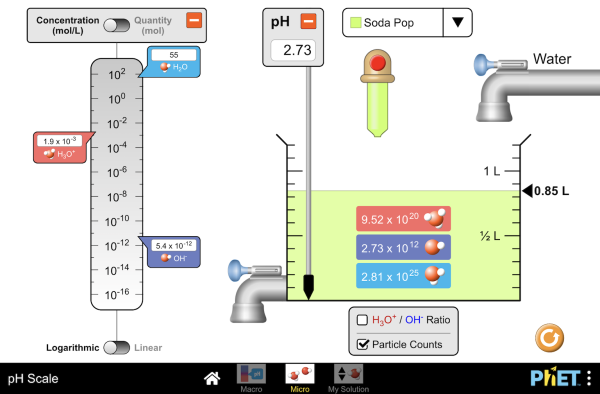
Student Directions: Use the Animation Below:
Group Performance:
- Investigate how adding water to the container of various liquids changes the pH of the liquids.
- Formulate questions and investigate explanations for the causes of the patterns you see.
- Develop evidence to support your explanations.
Individual Performance: (SSW)
- Write in your journal your explanation of this phenomenon. Include evidence to support your explanation for the cause of the change in pH.
Sunday, January 8, 2017
Engaging Students with Whiteboards - Earth Science
Earth and Space Science 5E Lesson:
What do students already know about weathering and erosion? (HS - ESS2-5)
A sort and classify activity is the perfect way to introduce students to using group whiteboards... lots of engagement and collaboration under the direction of guidance tasks provided by the teacher.
What do students already know about weathering and erosion? (HS - ESS2-5)
A sort and classify activity is the perfect way to introduce students to using group whiteboards... lots of engagement and collaboration under the direction of guidance tasks provided by the teacher.
This particular activity comes from the New Visions Earth Science Curriculum, which has a lot of great 5E learning activities.

Image source: https://s-media-cache-ak0.pinimg.com/236x/b7/8c/43/b78c436d12d7c61576e6f8fade0b626b.jpg
More about the 5E Model of Inquiry: https://bscs.org/bscs-5e-instructional-model
More about New Visions for Public Schools - Curriculum and Instruction Projects
Saturday, December 17, 2016
3-D Lesson Regents Chemistry - Chromatography
Chromatography Whiteboard Meeting
♫ Audio of Meeting
(The audio shows that you will go places you might not anticipate - but there is always an opportunity to learn - even for the teacher...)
Friday, December 16, 2016
3-D Lesson - Living Environment - Osmosis
3-D Biology Lesson: Road Salt and Osmosis
HS-LS1-2; HS-LS1-3; HS-LS2-1
This lesson is an example of curriculum adaptation.
Thursday, December 15, 2016
3-D Lesson - Regents Chemistry - Distillation
3-D Chemistry Lesson - Using Distillation as a Phenomenon:
HS-PS1-10; HS-PS3-1
This lesson is an example of curriculum adaptation -
Subscribe to:
Posts (Atom)